Understanding is important. Change matters too.
Depth, curiosity, and experiential work, in service of meaningful lasting change.
What if the symptom is trying to tell us something?
Anxiety, anger, perfectionism, people-pleasing, shutting down, or patterns that seem to work against you rarely exist in a vacuum. Often, they developed for a reason. They may have helped you adapt, protect something vulnerable, stay connected, or navigate circumstances that once required them.
I am interested in understanding symptoms rather than simply trying to eliminate them. What is this response protecting? What does it make possible, and what does it cost? What might it be asking us to understand?
This does not mean that suffering needs to be preserved or romanticized. It means that change can begin with curiosity rather than the assumption that something in you needs to be corrected.
“There is more in a human life than our theories of it allow.”
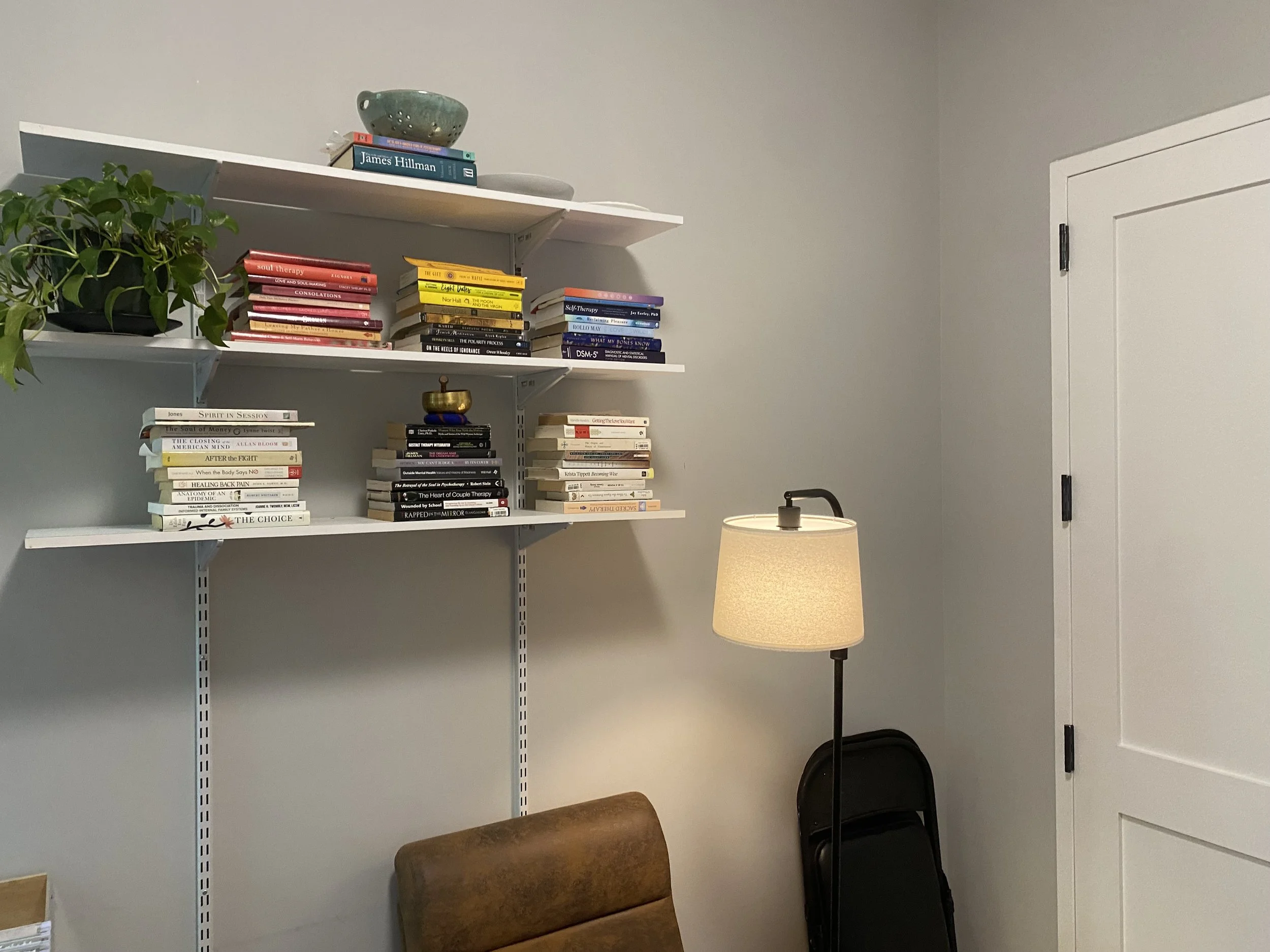
— James Hillman, The Soul’s Code
Working with the whole person
My approach is integrative, drawing from Internal Family Systems (IFS), relational EMDR and EMDR for complex trauma, somatic and sensorimotor psychotherapy, Somatic Experiencing (SE), Accelerated Experiential Dynamic Psychotherapy (AEDP), psychodynamic and depth psychology, attachment theory, and relational approaches.
In my work with couples, I also draw from Intimacy From the Inside Out (IFIO) and the Developmental Model of Couples Therapy.
Rather than following a single method, I bring together insight, experiential work, attention to the nervous system, and the therapeutic relationship, adapting the process to the particular person and what is emerging in the room.
How I Work
-
We begin by getting curious about what a pattern, reaction, or symptom may be communicating before trying to change it. What looks like a problem often makes more sense when we understand what shaped it and what it has been trying to accomplish.
-
Feeling deeply seen and understood matters. I also believe therapy should create the conditions for healing, movement, and meaningful change.
-
Therapy can involve more than thought and language. We may work with emotion, the body, imagination, relationships, protective patterns, and experiences that are difficult to reach through words alone.
-
Meaning, ethics, spirituality, faith, and even political or cultural values can shape how you understand yourself and the life you want to live. Therapy can make room for the dimensions of your experience and worldview that matter to you.
-
The aim is greater freedom from patterns that once protected you but now constrain you—and greater freedom to choose how you want to live. Over time, there can be more room to know what you want, trust yourself, and make choices you can stand behind.
More becomes possible.
Insight can open the door to change. Together, we can explore what has kept you stuck and make room for new ways of being.